2011년 8월 9일 화요일

Touba Trip (June 30)


Pics 1-4: The tapestery that we visited on the way to Touba.


Pics 5-11: The mosque in Touba, the holy city in Senegal

The village Life (June 30)

Today, we visited the village that Cheikh lived before coming to the states. When we got to the village at around 5, his brother were waiting with four horse carriages. When we arrived at the village, we were greeted by the whole village. All of us formed a big circle and the women started dancing to the drumbeats. After the long welcoming celebration, the cheif of the viallge showed us around. There is no electricity in the village so it was really dark as it got late. It was strange and sad to accept the difference between us and the villagers. We are from the world where we are so used to having electricity that we can't live a second without it, whereas the villagers are used to live in darkness at night. We want to have smart phones when we have access to internet everywhere as long as there's a laptop and some people even can't stand still without their cellphones. They just can't get away from the modern technology for a second. We always want something better although we have the same thing that's still in good condition.
 Why are we so greedy? Is it a problem with people or the society and how it creates the pressure to follow the trend?
It was really hard to accept the fact that we live in the same world because I felt like I time-travelled to the past. I don't even know why I once pitied African villagers for not having electricity when they don't seem to mind their life style at all. Having more doesn't necessarily means happier and better life because to me the people at the village were enjoying their life much better than we do back in the states. I guess always wanting more when we have enough is the problem with the non-villagers in other continents.


The only school in the village


They have French grading system


The traditional healer in the village


Dinner at the village ( this is how Senegalese eat food - sharing from a big plate)


3rd day of internship "Delivering a baby" (June 28)

Who would think that I would help a 20 year old mother to deliver her baby?
Today, I went into maternity to shadow nurses there. There were only 2 nurses and a midwife, who replaces a doctor in the surgery room. The surgery room actually really clean and it seemed it had everything that's needed to deliver a baby. It was just missing up-to-date devices/machines and was little less hygenic compare to the condtion of surgery room in the states. When I walked into the surgery room in the morning, there was a patient on the bed with a baby in the incubator. The nurse told me that women just gave a birth to a baby an hour ago and that she is just resting there until she feels better.
The nurse told me that they usually deliver 3-4 babies in average but there are some days with no patients too. There was nothing I could do but to sit and wait for patients to show up.  We sat there doing nothing for almost 3 hours when a 20 year old soon-to-be-a-mother walked in. The girl was screaming and singing a song in Wolof (it may have been a prayer.....who knows...).
Her water was already broke and the nurse told me to help her get on the bed with the gloves on. The nurse made the patient to spread her legs so she can check how dilated the vagina was. I was really shocked to witness all that and tried to step back when the nurse caught my hand and told me to check for myself. I told her that I'm not a doctor or a medical student and that I'm just there to shadow nurses.. and clearly she didn't get it because I spoke in English when she can't speak any. She held my hand and forced it into the patient's vagina. When I did, the girl started screaming even louder so I had to take my hand out.  The nurse told me that the girl is ready to give birth and told me to help her walk to the delivery room.
...........
.............
...................
.......................
Yes.. I saw everything...
............and all I can think of at the moment was that I don't want to have baby in my life. But then again, the pain didn't last long for her since she stopped screaming and passed out as soon as the baby's shoulder was out. She even smailed when the nurse showed her the baby. I guess I'll never find out til I'm in that position:)
When the baby was out, the nurse told me to cut the umbilical cord..but I just couldn't do it. I didn't know how and I wasn't ready for it...most importantly, I didn't want to ruin the day by making a mistake.
This three day internship motivate me to learn foreign language and also to do volunteerings as much as I can. Hope this experience was worth it to motivate and encourage me in preparing for the future!


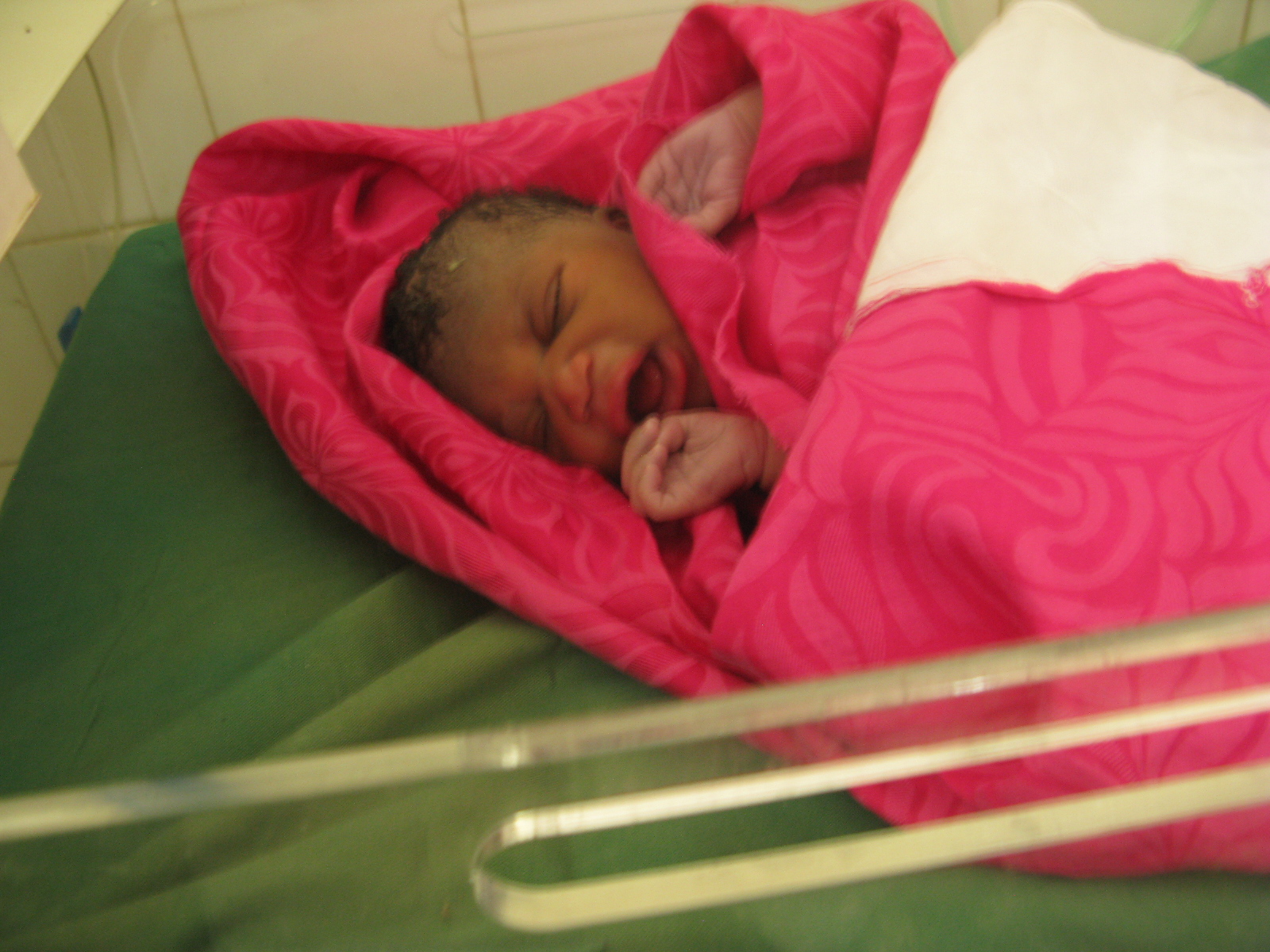
An hour old baby


I took pictures of the posters on the wall..thinking that this would be all I'll be staring at on my last day of the internship
Hello Baby♥

2nd day of the Internship (June 28)

Dentist's office


A dentist with a patient


patients waiting in line to see gynecologist

Inside the gynecologist's office

* Had another tour of the health center
*Today was just shadowing cardiologists in the office. Unlike the states, where doctors keep all of patients’ information and medical records on computer, everything was kept and recorded on paper and pen. When a patient walks into the office, a doctor writes down the patient’s name, date of birth, address, symptoms, and diagnosis for the record. If the patient is returing patient, he or she bring in their past prescriptions and any past medical records like ECG or X-rays and show them to the doctors. The doctors look at the documents that the patient brought in and use them to base the dignosis or change the dosage or strength of the drugs and give him the new prescription. The cardiologist see about 14 patients per day in average with 3 interns in the office. If the patient has an insurance, then the doctor's visit and the prescriptions are covered and only need to pay about 2000 CFA which is like $4 in US currency.  However, for those who doesn't have insurance and can't afford expensive drugs, doctors can prescribe them generics and can get it from the pharmacy in the health center, which is cheaper compare to the regular retail pharmacy.

Internship "Giving free vaccine to children" (June 27)

                Since Rohini and I live in different neighborhood, we decided to meet at WARC so we can get a cab together to go to the center. When we got there, we tried to find the guy who we met on last Thursday. But with neither of us speaking French, it was hard to communicate with anyone at the center. We ended up with a pharmacist who can speak English and he told us that we can choose wherever we want to go and shadow. I wanted to stay at the pharmacy but he told me there is not much thing going on in the pharmacy and that I should rather go to pediatrics since I was interested in that section too. He introduced me to a nurse in pediatrics and I tried everything I can to communicate with her. She asked me if I was interested in following the volunteers who were going to leave soon to give free vaccination to children in the neighborhood. I told her I would do it and was introduced to the only guy who can speak English from the group.
We were split into 3 groups and got cabs to go to the neighborhood. The guy told me that they give free Polio vaccination twice a year to children(newborn to 5 year old) who can’t afford to get shots on their own. The neighborhood we ended up going was right by the African Renaissance monument. As you can see in the pictures, the houses were in really bad conditions(actually, its more like wracks than houses).  The houses are built on the bare ground with the metal cardboard and there were no furnitures inside whatsoever except some blankets and buckets. What's worse is that in one of the houses, a women was trying to make fire with rocks and paper. 
We had to knock one each door to see if there is a child in the house. Since, it is so hard to keep a record of people living in the neighborhood, that was the only  way to make sure that we don't miss any babies to give vaccines. It was really sad to see babies playing on the ground and drinking water from dirty buckets. What made it worse/sad is that the parents didn't seem to mind seeing and letting babies play on the street even though the neighborhood was full of garbage and construction sites.  
Walking around the neighborhood to give free vaccines


Giving oral polio vaccine to a 3-year-old boy


No wonder Senegalese hate that monument so much!!

Wrestling Match (June 26)

The wrestling match stadium


The drumroll doesn't stop through out the whole match


Before the match, each wrestler and the entourage dance by the drumbeats. The fans cheer when their wrestler danced in front of their sections. While dancing, the wrestler splash the holy water onto his body to win the match.

                                                            The Wrestling Match


Fans cheering their wrestler from the bench

The disappointment
Throughout the game, there was a lot going on on the field. Some people were singing and the group of women were dressed in very colorful Senegalese traditional dress and were dancing by the drum beats. I guess the wrestling match isn't all about winning/losing in Senegal. It's more like a celebration and show that peole can enjoy and be part of. Although it was hard to not to get distracted by dancing and singing, I really enjoyed watching the traditional Senegalese wrestling match.


Grande Mosque de Dakar & Keur Moussa Monastery (June24 &25)

June 24, 2011
Inside the Tata


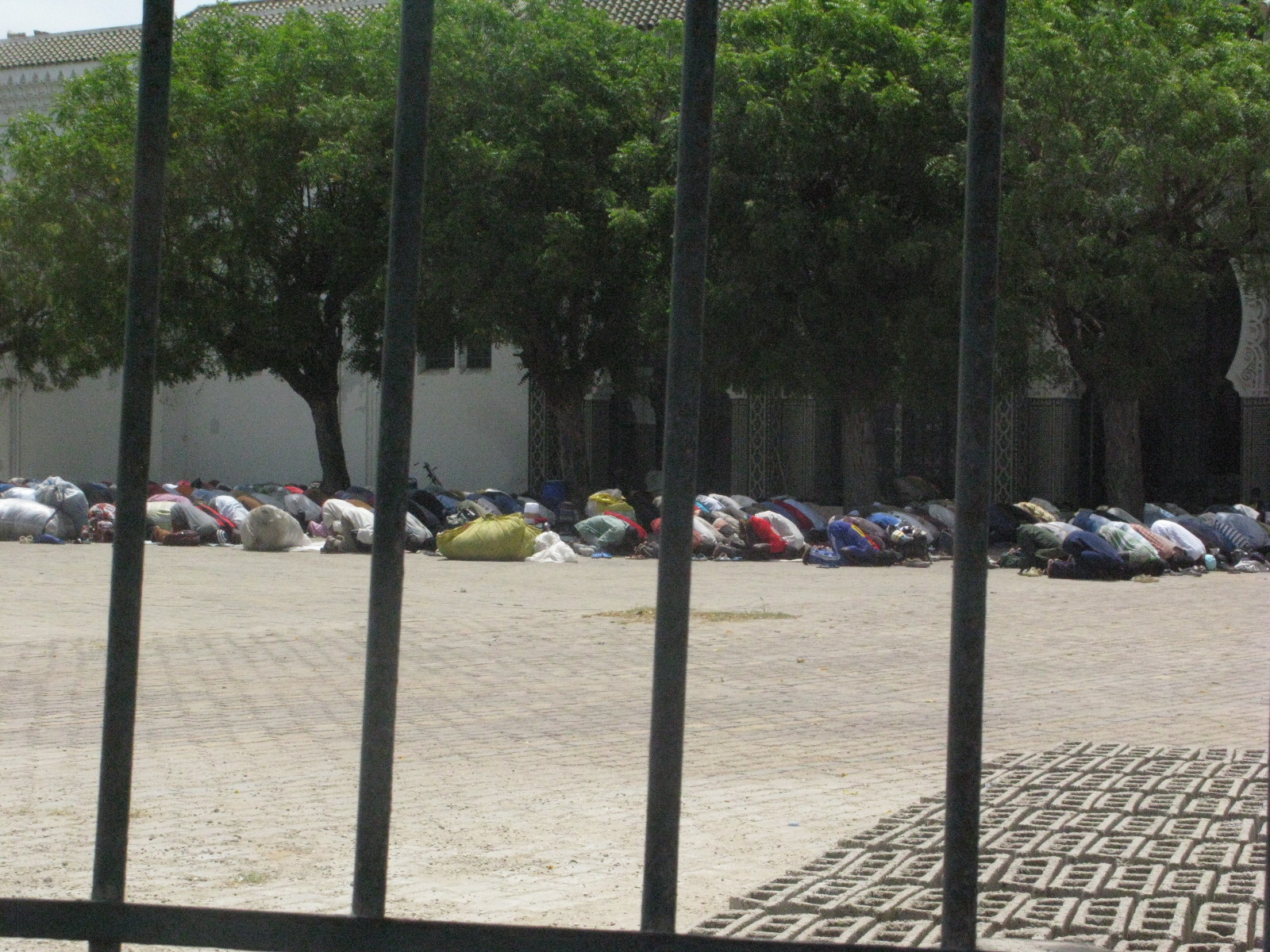
People praying at the mosque


What’s so special about Islam that over 90% of people are Muslims in Senegal despite the fact that the land was once colonized by France, in which Christianity is more prevalent?
Today, we had a class on Senegalese religions in the morning and in the afternon we went to Grande Mosque de Dakar on Tata(one of public transportations in Senegal)
When we got there, people were hurrying into the mosque for the prayer but men and women entered the mosque through two different doors. To me, it seemed contradictory to see because one of the basic mottos of Islam is equality. Muslims pray five times a day starting 5 in the morning and the last one at 8:30 at night.


                                                                    June 25, 2011


Kora


the chapel


Lunch at the monestery


Pamplemousse made in Keur Moussa

As weird as it sounds, although over 90% of people are Islam in Senegal, Christianity coexist without any problems.  The Keur Moussa Monastery is one of the well-known monastery in Senegal. The monastery is self-sufficient, which means that they grow and produce their own food that's needed within the monastery. Anyone is welcome to join the monastery to become a monk but for a person to become a monk, he needs to spend at least about 10 years until he can take a final vow to become a real monk. After first two years at the monastery, a person can decide whether he wants to continue or not and if he chooses to not come back there is no pressure on him to return to the monastery. Keur Moussa is also famous for its Kora workshop. A kora is a traditional Senegalese string instrument made of cow skin and calabash. At the workshop, the monk in charge showed us how to play and also the scientific aspect of Kora making. The pitch of each string on Kora varies depending on the tension between the string and the bridge. The sound of Kora is very similar to that of Harp but just smaller and easier to carry to places. Unlike muslims who pray 5 times a day, the monks pray seven times a day and have two mass. Similar to the chapel we went on the first day, the chapel at Keur Moussa also had the paintings of African saints on the wall. I guess I have to google this as soon as I get home to find out why there are paintings of African saints and no Asian saints!!